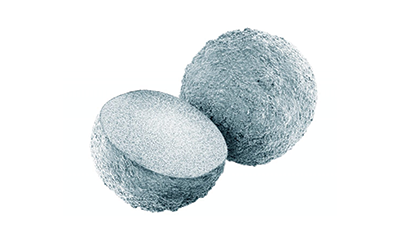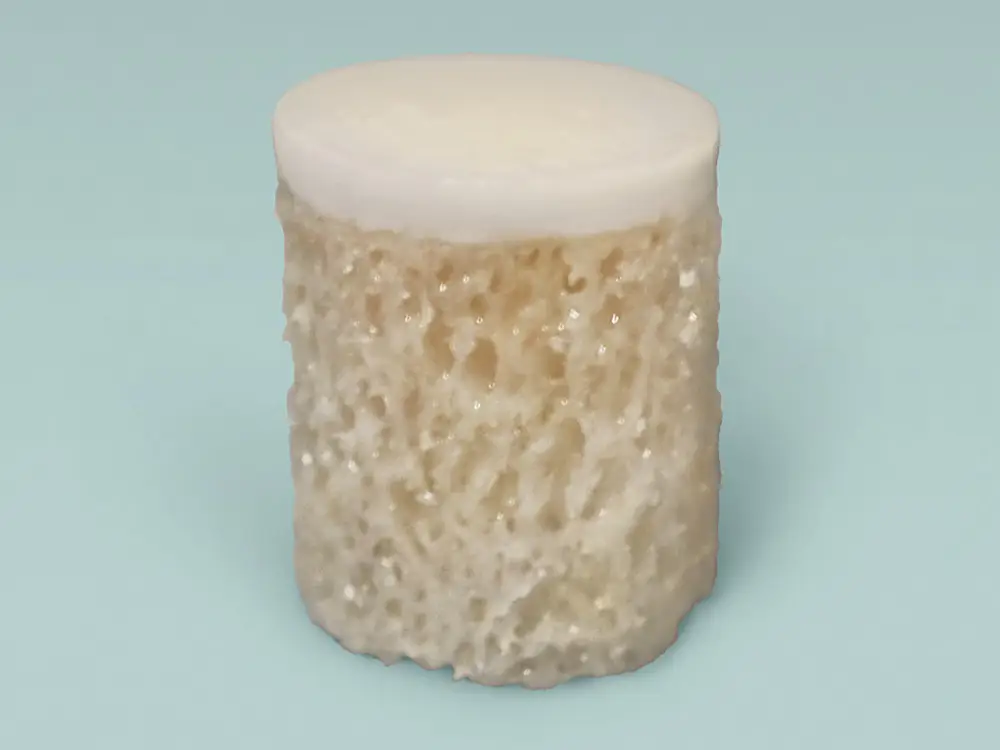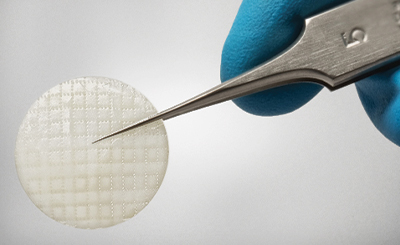
ProChondrix CR: Viable, hyaline, cartilage allograft for the repair and replacement of articular cartilage
View product

Chondral defects in the hip due to trauma, osteonecrosis, labral tears, and other causes can result in severe dysfunction and joint pain. Femoroacetabular impingement (FAI) is another common cause of localised cartilage defects requiring hip arthroscopy.
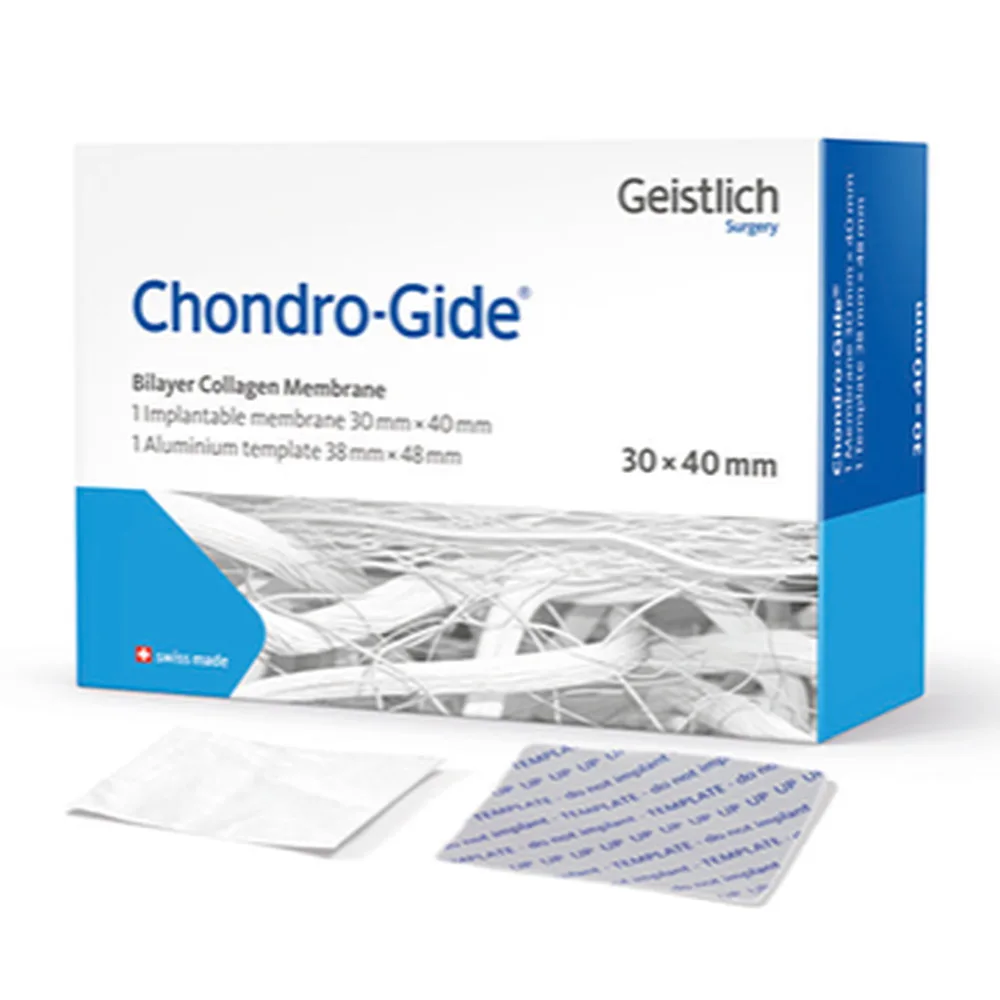
AMIC®/AMIC®+ Chondro-Gide® is a minimally invasive, single-step procedure that uses bone marrow stimulation combined with Chondro-Gide® to repair cartilage defects of all sizes. Developed by Geistlich in collaboration with leading surgeons in Europe, it is an effective and cost-effective treatment for repairing damaged cartilage, alleviating or preventing pain, and slowing the progression of damage.
Damaged cartilage has limited capacity to heal itself. If left untreated, the damage can worsen over time. With minimally invasive arthroscopic treatment approaches for chondral defects in the hip, preserving the hip-joint cartilage and delaying or possibly even avoiding total hip replacement surgery is now possible.
With its specially designed bilayer structure, Chondro-Gide® provides a protective environment that fosters the growth of new cartilage.
Chondro-Gide® provides a protective cover and keeps in place cells released from the bone or introduced into a defect. It complements regenerative treatment approaches for chondral and osteochondral lesions. Whilst enveloping the defect and the cells within it during the initial stages of the healing process, Chondro-Gide® resorbs over approximately 4 months and is replaced by native tissue.
The use of Chondro-Gide® in the hip is well established. Data up to 8 years post-op clearly demonstrates the long-term advantages of AMIC® Chondro-Gide® compared to MFx alone in acetabular defects. In a study comparing arthroscopic MFx alone with AMIC® Chondro-Gide®, De Girolamo et al. investigated 109 patients with chondral defects in the hip associated with FAI, treated with either AMIC® Chondro-Gide® or MFx. There was no significant difference in age or average defect size between the two patient groups. AMIC® results remained stable up to 8 years, whilst MFx results worsened after 2 years.
Fontana and De Girolamo (2015) demonstrated sustained 5-year benefit of AMIC® Chondro-Gide® for femoroacetabular impingement-induced chondral lesions compared with microfracture treatment.
De Girolamo et al. (2019) showed that both standard AMIC® and AMIC® enhanced by autologous concentrated bone marrow aspirate (BMAC) allow for stable clinical and functional improvements at up to 9 years follow-up in a randomised controlled study.
A 5-year study by Mancini and Fontana compared AMIC® Chondro-Gide® with matrix-induced autologous chondrocyte implantation (MACI) for the treatment of medium-sized acetabular chondral defects. AMIC® offers additional benefits as a single-step, minimally invasive procedure that can reduce total treatment time and minimise morbidity.
Author
Title
Link
Autologous matrix-induced chondrogenesis and bone marrow aspirate concentrate compared with microfracture for arthroscopic treatment of femoroacetabular impingement and chondral lesions of the hip